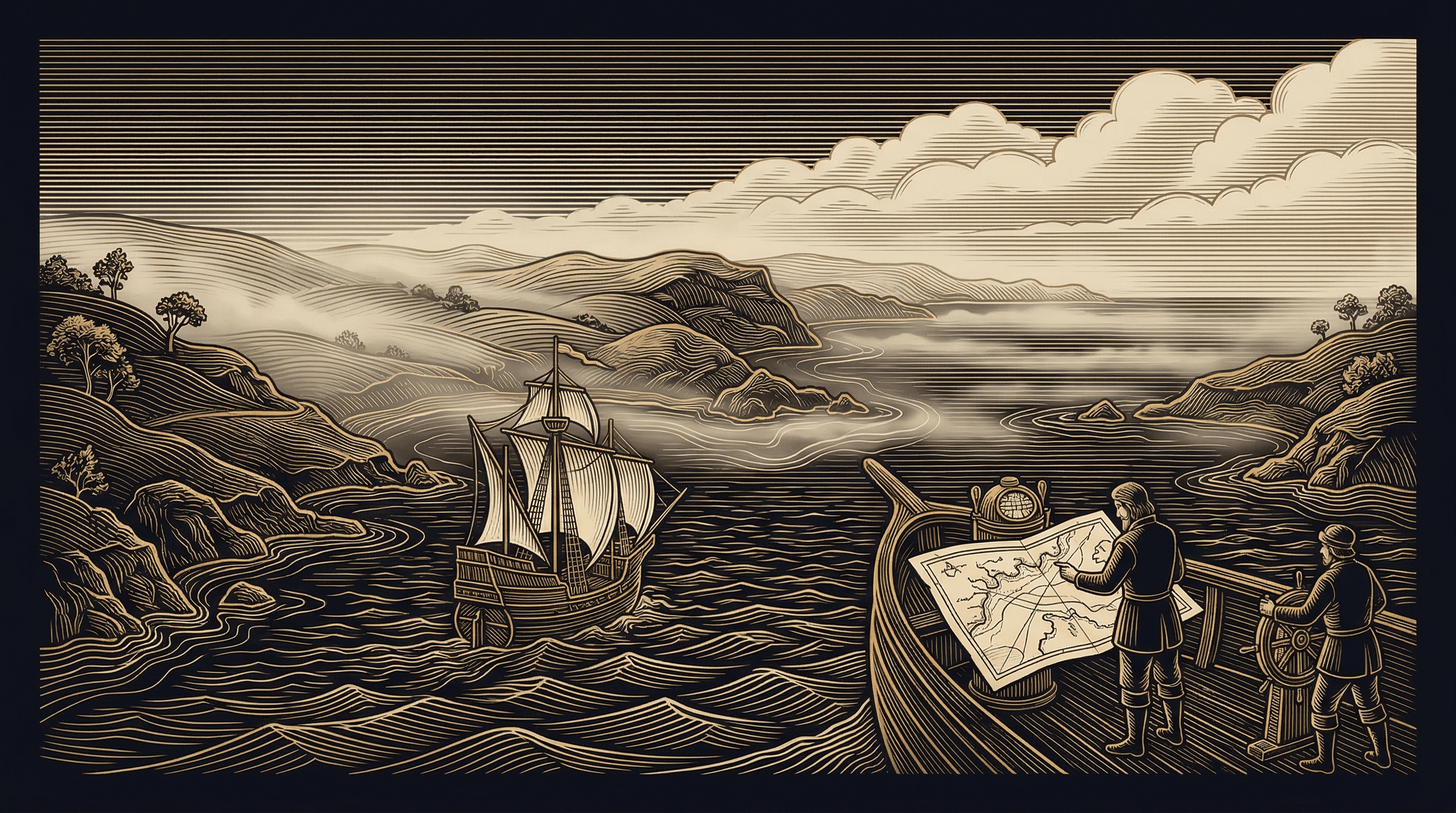
The Map Precedes the Choice: Sense-Making as Reality Navigation
EpistemologySensemakingSystems ThinkingCollective Intelligence
82% fidelity
The Translation
AI-assisted summaryFamiliar terms
Sense-making is positioned here not as a cognitive luxury but as the constitutive prerequisite to effective agency. The argument runs as follows: human beings are choice-making creatures, and the quality of those choices is structurally dependent on the accuracy of the model of reality from which they are made. A miscalibrated map of the world does not merely produce occasional errors — it produces systematic misalignment between intention and outcome, because every downstream decision inherits the distortions of its Epistemic foundation. This reframes Sense-making as an Ontological and practical priority rather than a purely intellectual one. The question 'What is real?' is not abstract philosophy; it is the load-bearing question beneath all planning, strategy, and coordinated action. The insight extends naturally into the collective dimension. Individual Sense-making is already difficult; shared Sense-making — the construction of a sufficiently accurate and sufficiently common model of reality among a group of agents — is harder still, yet it is precisely what is required for collective action to be genuinely responsive to actual conditions rather than to inherited assumptions or social consensus. The move from 'how do I make better choices' to 'how do we make better choices together' is therefore not merely a scaling of the individual problem. It introduces new challenges of epistemic coordination, trust, and the nEgotiation of divergent interpretations of a shared environment.
Connected Nodes
Mapping neighbors...