The Contingent Civilizational Fork: Backtracking Toward Wholeness
PhenomenologyCivilizational RiskCultural EvolutionMeaning Crisis
78% fidelity
The Translation
AI-assisted summaryFamiliar terms
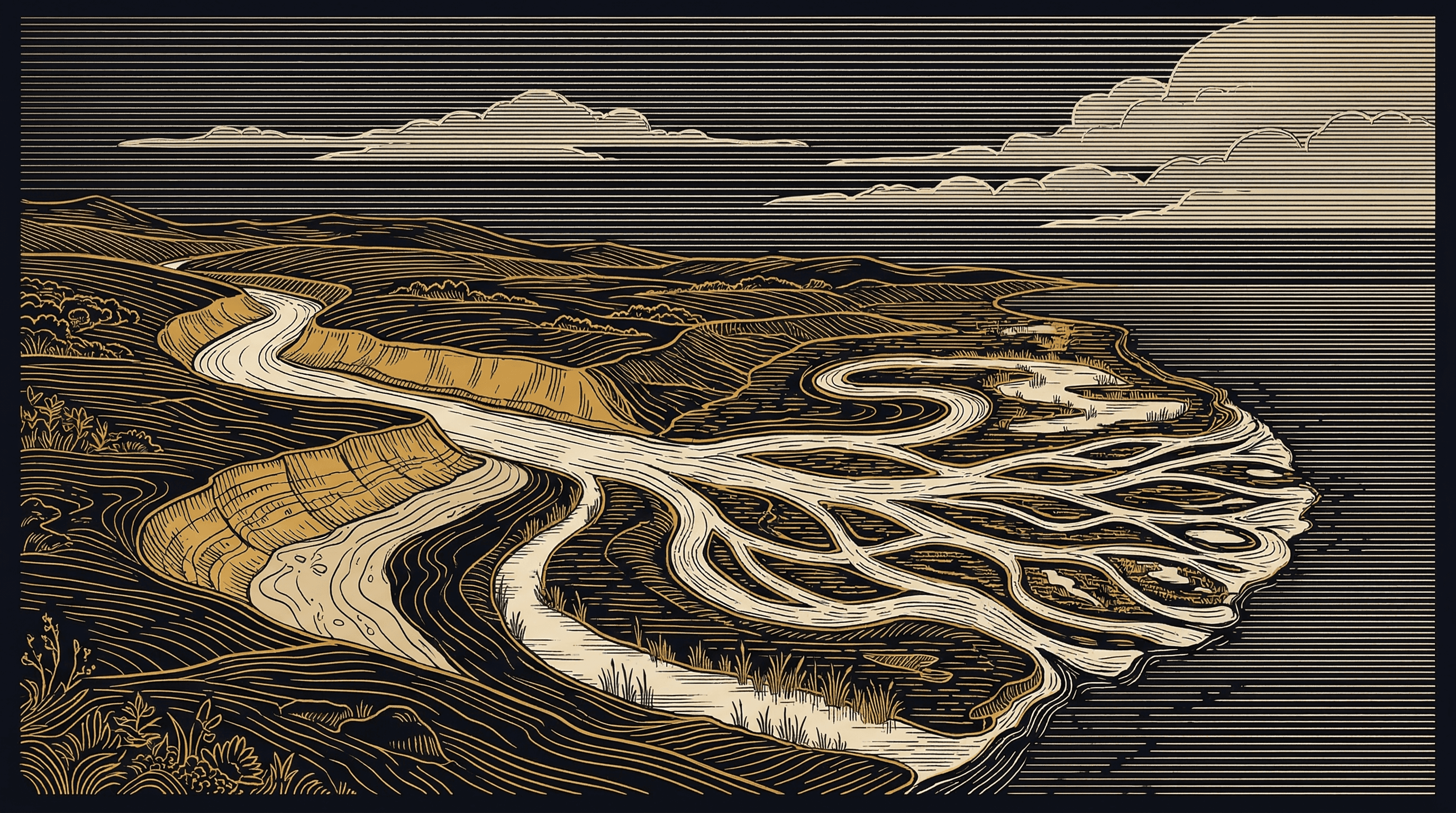
This perspective begins with a phenomenological claim: that goodness, truth, and beauty are not merely normative abstractions but experiential realities — things that can be directly encountered. The animating tension is then the gap between that experiential possibility and the impoverishment of ordinary modern life. If transcendent experience is genuinely available to human beings, why does the dominant civilizational arrangement seem so systematically hostile to it? The inquiry turns to historical anthropology as a diagnostic tool. Works like Jared Diamond's Guns, Germs, and Steel, Yuval Harari's broad civilizational histories, and David Graeber and David Wengrow's The Dawn of Everything are read not merely as scholarship but as evidence for a central thesis: that the current organization of human life is contingent, not necessary. These works collectively demonstrate that human societies have experimented with radically different structures of consciousness, community, and governance — and that the particular path Western modernity took was one choice among many real alternatives. The critical move here is to reframe the political and civilizational question. Rather than asking how to optimize existing institutions, the question becomes whether the foundational premises of those institutions are themselves the problem. This is a diagnostic rather than a reformist stance. It looks for the fork in the road — the historical moment or set of moments where a different trajectory was possible and not taken. The orientation is described as post-tragic: it does not flinch from the scale of what has been lost, but it refuses despair, insisting that locating the wrong turn is the precondition for finding a more whole way forward.
Connected Nodes
Mapping neighbors...