Stone-Age Minds in Hyper-Modern Worlds
Philosophy of MindSystems ThinkingEvolutionary BiologyCivilizational Risk
78% fidelity
The Translation
AI-assisted summaryFamiliar terms
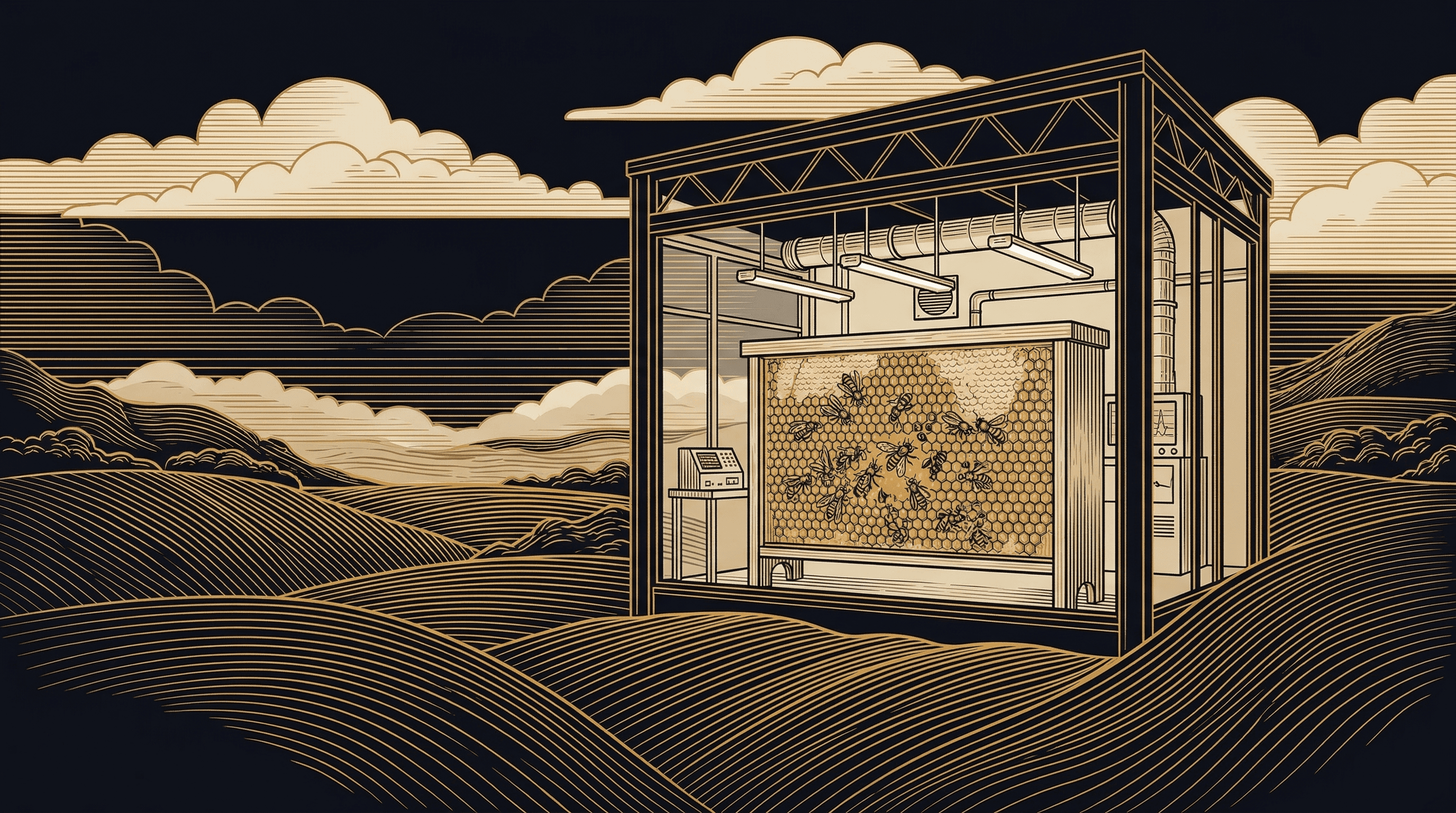
The familiar claim that culture is upstream of politics gets an important extension here: biology is upstream of culture itself. This argument draws on evolutionary psychology and behavioral biology to challenge the Enlightenment assumption of radical human agency. Since Descartes, Western thought has progressively bracketed the animal substrate of human cognition, treating reason as the primary driver of individual and collective behavior. The evidence from primatology and neuroscience complicates this flattering self-portrait considerably. Oxytocin, for instance, is widely celebrated as a prosocial bonding molecule, but research reveals it functions as an ethnocentric agent — strengthening in-group cohesion while amplifying out-group suspicion. Mate selection, status hierarchies, threat detection, and reward-seeking all follow patterns that are recognizable across primate species and largely impervious to ideological override. The implication is that the civilizational crises typically framed as environmental, economic, or political are better understood as expressions of a deeper mismatch: Paleolithic Cognitive architecture operating inside hyper-modern institutional and technological environments. Political interventions operate at the surface layer. Cultural interventions go one level deeper. But neither reaches the biological substrate where the actual behavioral defaults are encoded. This layered model — biology first, culture second, politics third — suggests that durable solutions require engaging with evolved human nature directly, rather than assuming it away through appeals to rational self-interest or moral progress.
Connected Nodes
Mapping neighbors...