Order Against the Drift: Energy as Existence
Information TheorySystems ThinkingComplexity Science
78% fidelity
The Translation
AI-assisted summaryFamiliar terms
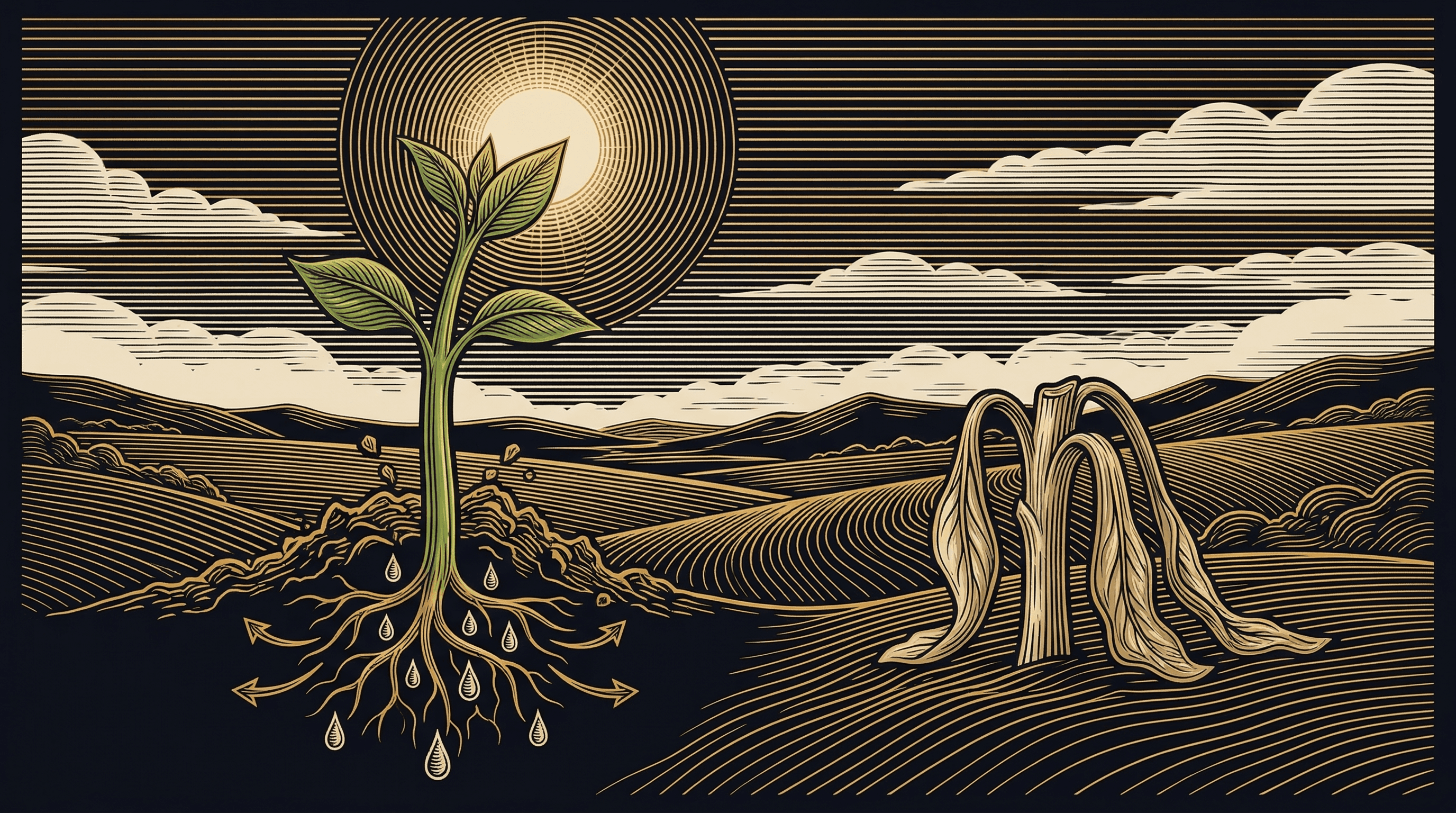
The second law of thermodynamics establishes entropy increase as the governing tendency of closed systems — a probabilistic inevitability rather than a mysterious force. Because the number of disordered microstates vastly exceeds that of ordered ones, any system left to chance will migrate toward maximum entropy: thermal equilibrium, the dissolution of gradients, the loss of structure. Order is not forbidden; it is simply improbable, and improbability has a cost. Sustaining a low-entropy configuration requires the continuous expenditure of free energy — energy capable of doing thermodynamic work. The more complex and differentiated the configuration, the steeper that energetic demand. This creates what might be called the prime directive of existence: any entity that persists must actively resist Entropic dissolution. Crucially, this resistance cannot be self-sustaining within an isolated system, because free energy within a closed system degrades irreversibly. Only open systems — those coupled to an external energy source — can maintain structural integrity over time. This insight reframes existence as fundamentally relational. Every persisting structure, from a crystal lattice to a metabolizing organism to a social institution, is best understood not as a self-contained object but as a dynamic process embedded in an energy environment. Stability is not a passive condition; it is an ongoing thermodynamic achievement. The boundary between a system and its environment is not incidental — it is the very site where the work of existence is performed.
Connected Nodes
Mapping neighbors...