Life as Embodied Meaning: Evolution's Three-Billion-Year Learning
Evolutionary BiologyInformation TheoryEcologyEmbodied Cognition
82% fidelity
The Translation
AI-assisted summaryFamiliar terms
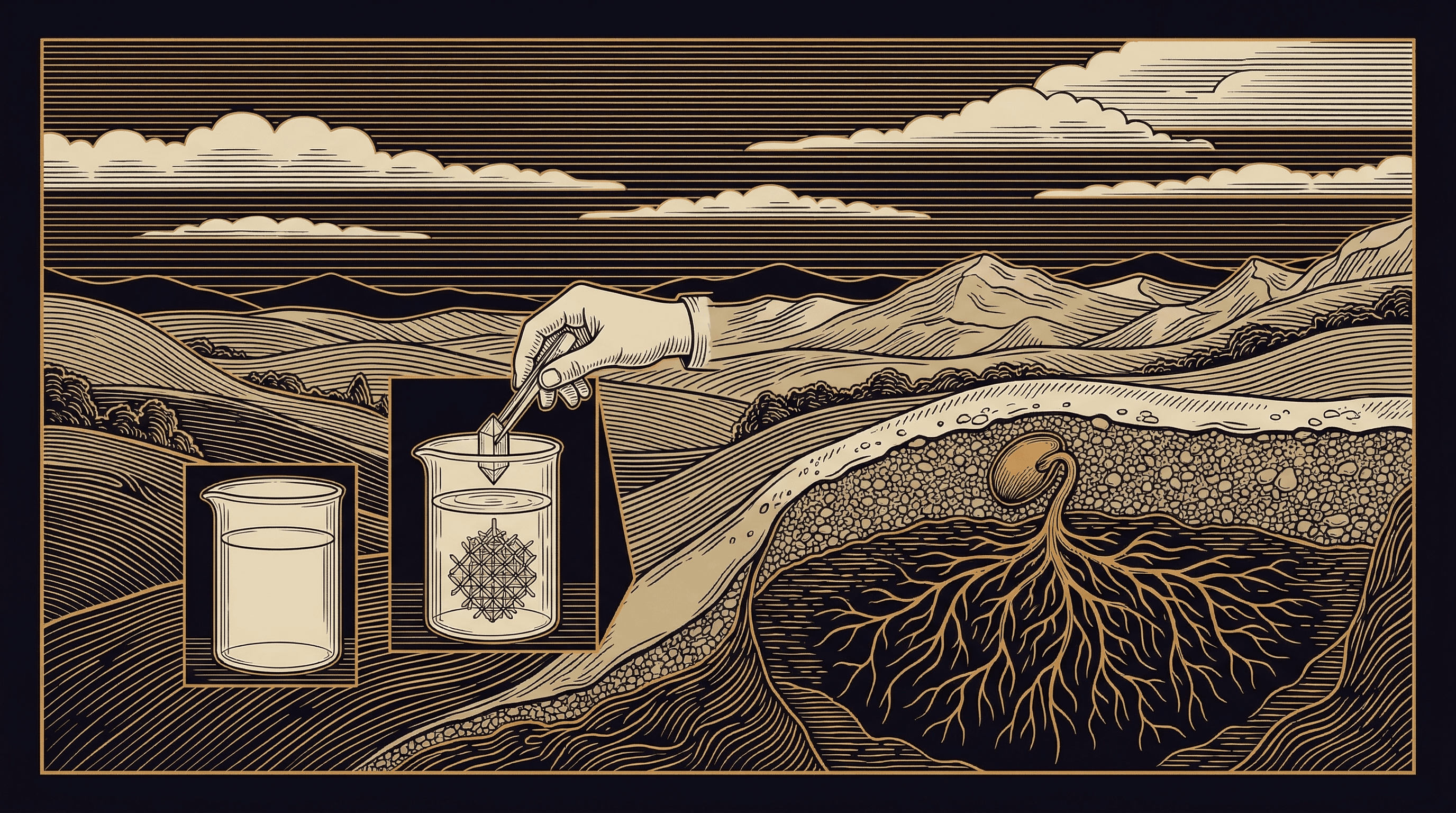
What distinguishes life from other Dissipative Structures is not thermodynamic persistence alone, but the capacity to encode, transmit, and update Semantic information about the environment through a symbolic medium — the genetic code. Dissipative Structures like flames or Bénard convection cells maintain themselves far from equilibrium, but they carry no representational content. They embody no history of selection against an ecological reference. Life is catEgorically different: the genotype functions as a compressed, inherited model of the organism's niche, shaped by billions of years of differential reproductive success. The phenotype is, in a precise sense, a hypothesis about the environment — one that natural selection continuously tests and refines. entropic noise in genetic transmission, rather than being merely destructive, generates the variation that makes this refinement possible. Evolution thus operates as an information-rectification process: it filters organismal representations against environmental pressures, selecting for increasingly well-coupled organism-ecology relationships. This framing positions evolution not as a blind, purposeless mechanism but as a non-normative process that nonetheless produces organisms of increasing normative capacity — creatures progressively better equipped to evaluate and respond to informational signals from their surroundings. The organism is, in this sense, embodied meaning: a physical instantiation of learned environmental constraints. And the evolutionary process itself is a form of cosmic epistemology — a mechanism by which the biosphere has been accumulating knowledge about the structure of the world for nearly four billion years.
Connected Nodes
Mapping neighbors...