Conditioning, Not Nature: The Cultivable Human
Evolutionary BiologyDevelopmental PsychologyCultural EvolutionOntological Design
78% fidelity
The Translation
AI-assisted summaryFamiliar terms
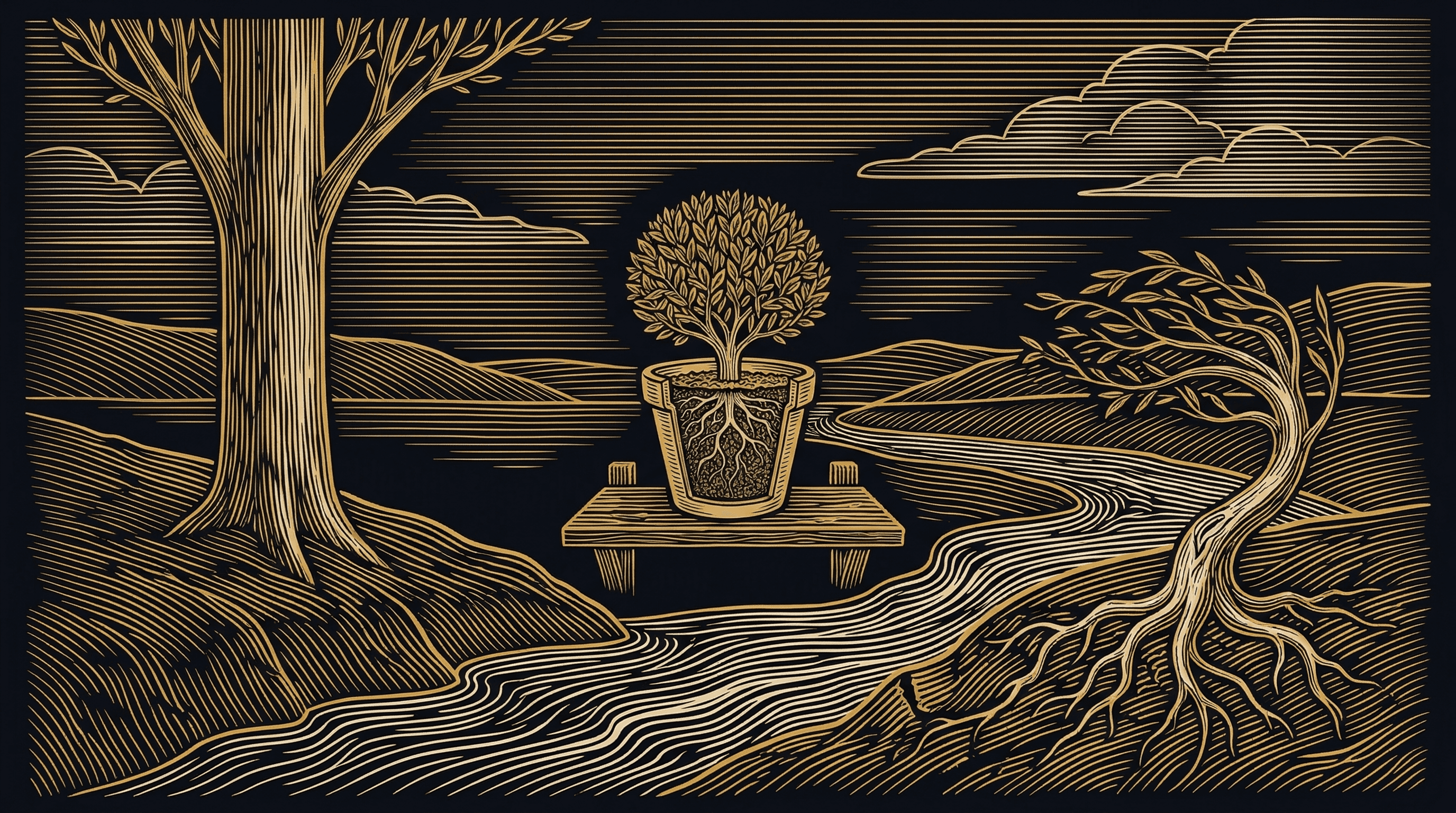
Evolutionary psychology faces a foundational sampling problem. The behaviors it most often studies are drawn from WEIRD populations — Western, Educated, Industrialized, Rich, Democratic — and these behaviors are then naturalized as species-typical through reductionist genetic correlation. The circularity is significant: conditioned outputs are treated as biological baselines, and molecular correlates of those outputs are taken as causal confirmation. Cross-cultural and historical data complicate this picture considerably. Distributions of traits like interpersonal violence, epistemic patience, and valuation of learning vary not merely at the individual level but at the population level across time and context — suggesting genuine developmental plasticity rather than fixed biological expression. The persistence of certain value orientations within diaspora communities under conditions of material deprivation and social hostility offers a particularly striking case: it implies that cultural transmission systems can maintain and reproduce high-capacity developmental norms even when structural supports are absent. The theoretical implication is that what presents as human nature may largely be the residue of conditioning environments — specifically, environments that have systematically under-cultivated available human capacities. This distinction carries real consequences. A hardwired account of destructive behavior forecloses intervention at the level of cause. A conditioning account opens the possibility of redesigning developmental environments — educational structures, cultural value systems, early-life contexts — as primary levers for shifting population-level behavioral distributions.
Connected Nodes
Mapping neighbors...